
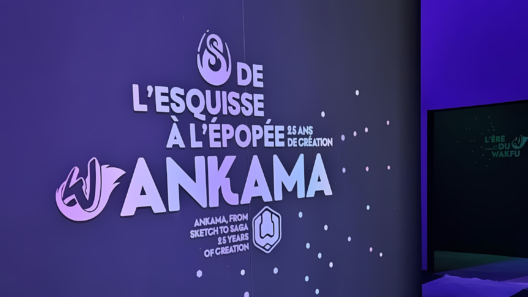

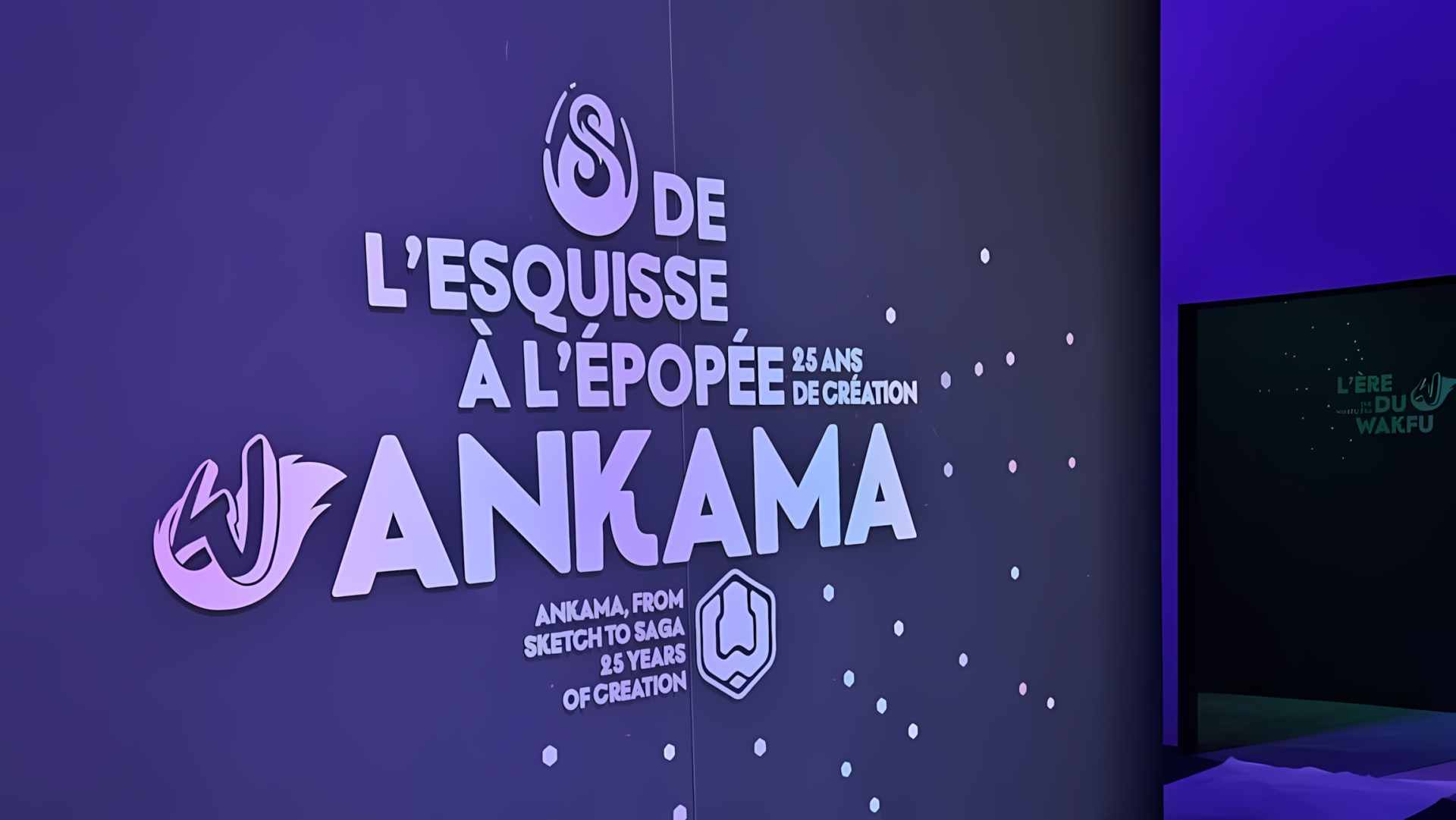
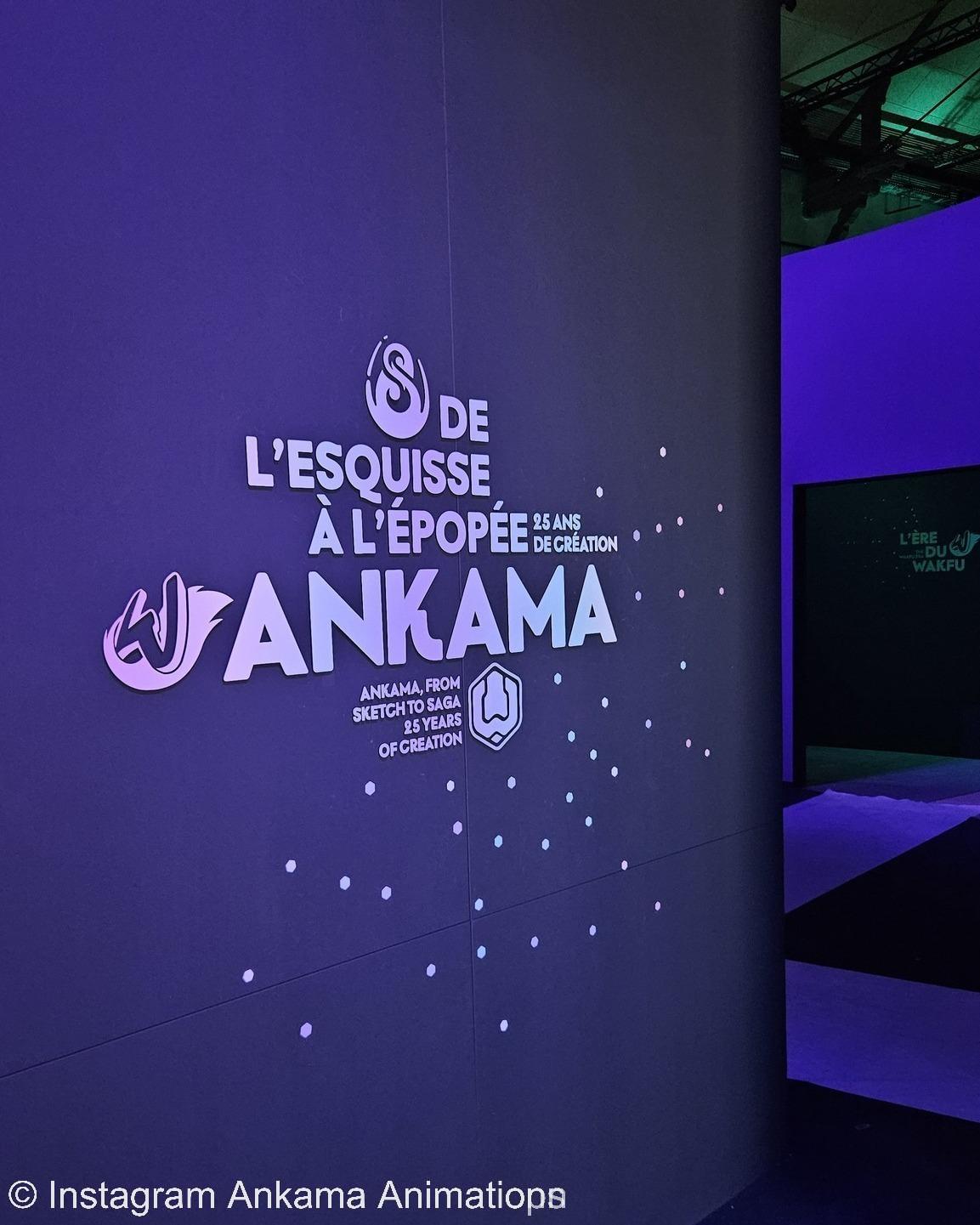
Since June, the Haras d’Annecy, renovated for the occasion, has housed the museum of the Cité internationale du cinéma d’animation (International Animation Film City). The building is large, new and air-conditioned, which is no small detail in the middle of summer. I was able to see all three available exhibitions: the permanent exhibition, presented as unique in the world for discovering and understanding the history of animation, the exhibition devoted to the LAIKA studio and, above all, the major Ankama Animations exhibition, “From Sketch to Epic”.
I took the guided tour of the Ankama exhibition on a Saturday at 11 a.m. Out of four expected participants, there were only two of us: me and a Swiss Dofus player ranked in the top 100 of the leaderboard (by his own account 😉). Over the whole morning, between 11 a.m. and 1 p.m., there were barely ten visitors in the exhibition’s 650 m².
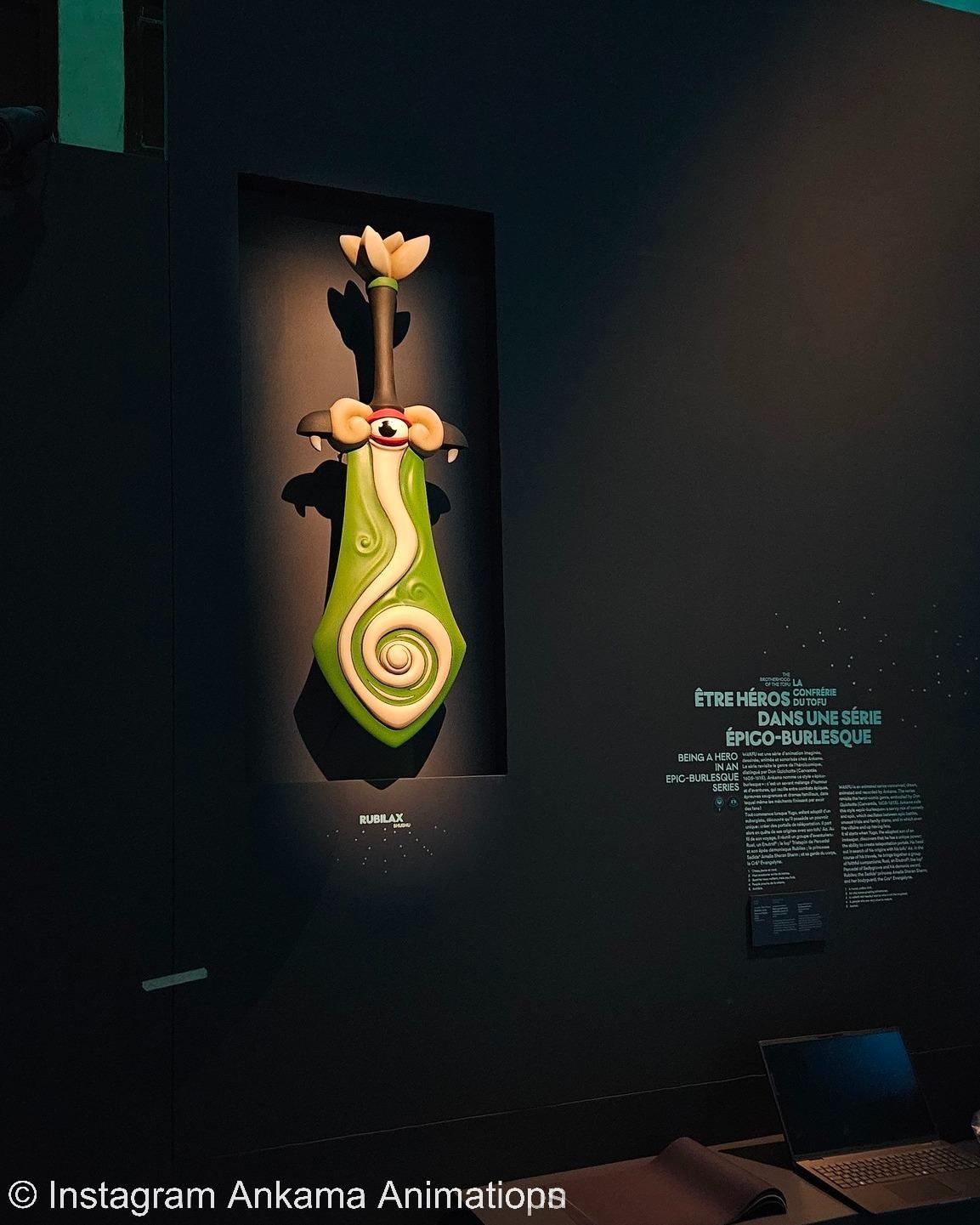
While we waited for the people who never showed up, I was able to ask the guide about attendance and the audience. She described a very uneven turnout: some tours have gathered twenty people, others have been cancelled, and others have drawn only three or four participants. She did not give an estimate of the exhibition’s overall attendance, only these examples from guided tours.
She also observed that visitors are not familiar with Ankama’s universes. This summer, a great many children dragged their parents through the exhibition to see Wakfu. These are mostly children who discovered the series, rather than parents nostalgic for Dofus.
A tour focused on what worked
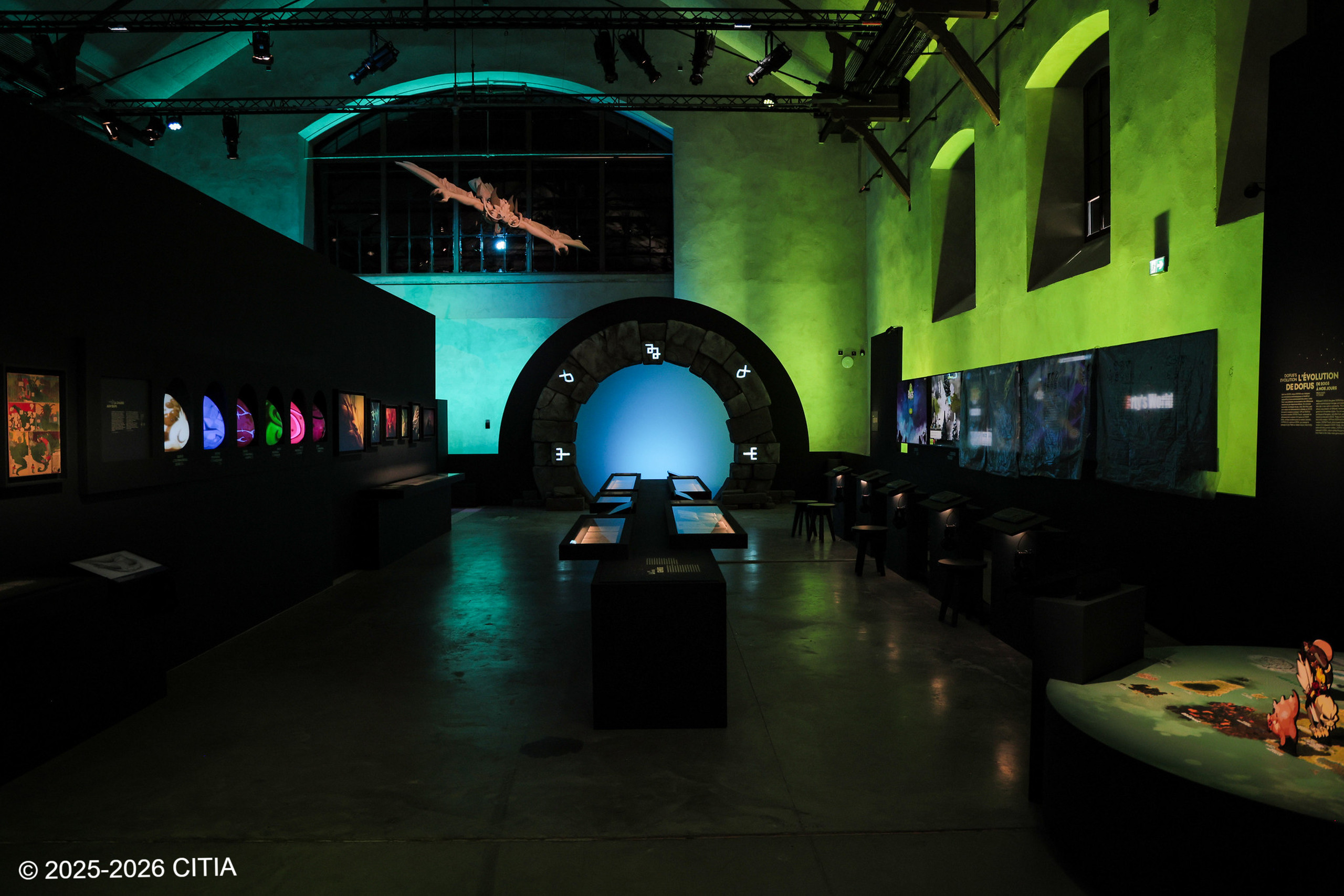
The exhibition covers 650 m², but the space is both vast and underused. Large areas keep visitors from bumping into each other, but some of them could have been better laid out. The temporary format shows: no frills, each stage in the studio’s life is covered quickly, even if it means leaving out certain aspects, deliberately or not. The guide did not explain these omissions. The exhibition focuses mainly on what worked at Ankama.
The tour is not limited to animation. It begins with the video game Dofus, moves on to the Wakfu animated series and ends with Waven, on the animation side.
The tour lasted less than an hour. The guide did not read from any notes: she shared many anecdotes that people attached to Ankama know well. Among them were the wordplay found in the studio’s games, its working conditions in the early days and its current home in the buildings of a former spinning mill in Roubaix. Some of the anecdotes may well be word for word those of the documentary made by Nolife in the late 2000s.
Since I already had a solid knowledge of the studio and its productions, I did not learn anything major. The guide did confide, however, that Ankama had used the preparation of the exhibition to make a realization: the studio had long neglected its own archives. According to her, no real heritage preservation work had been done since the company was founded, and the studio’s history rests largely on ToT’s notebooks.
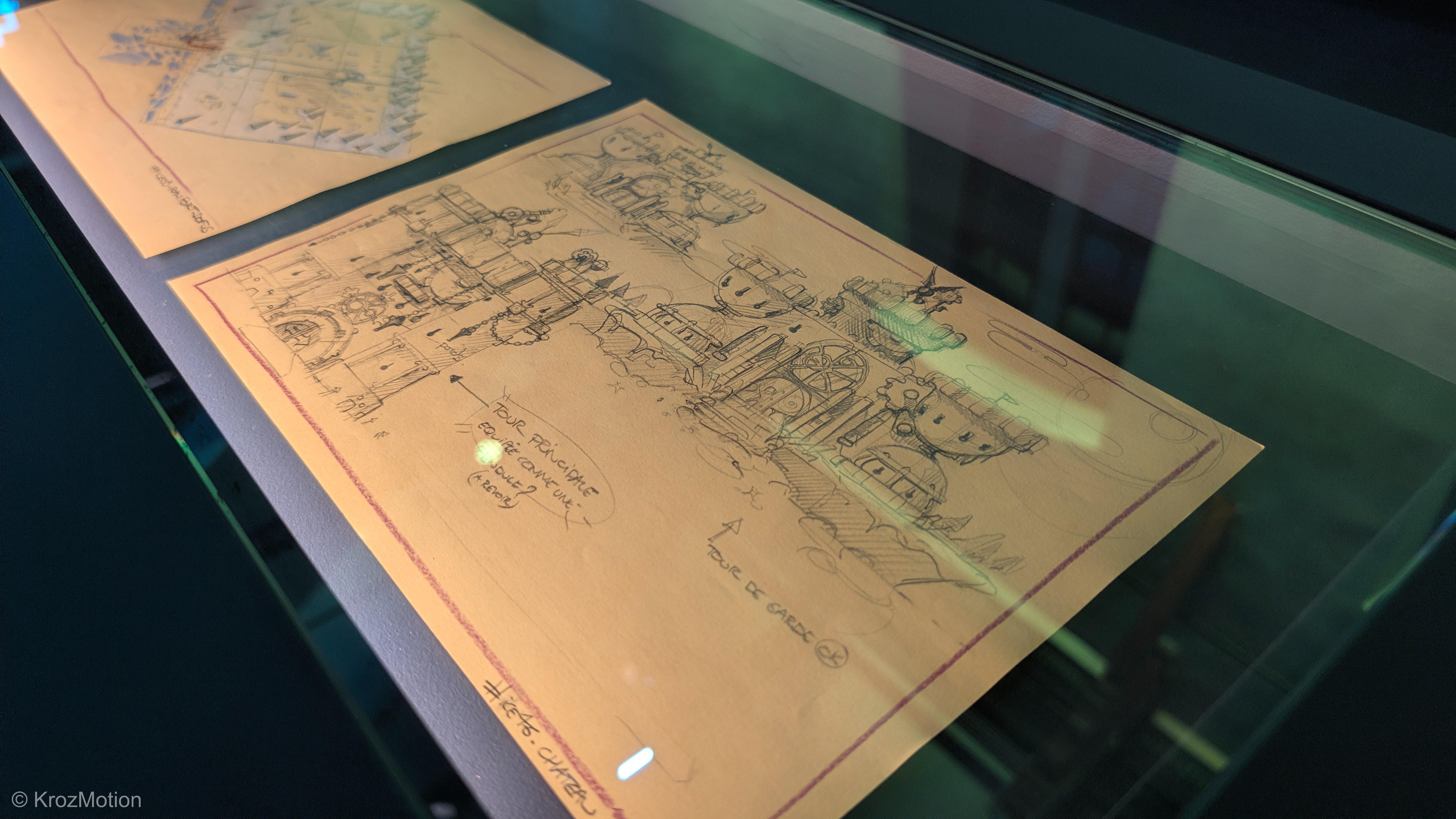
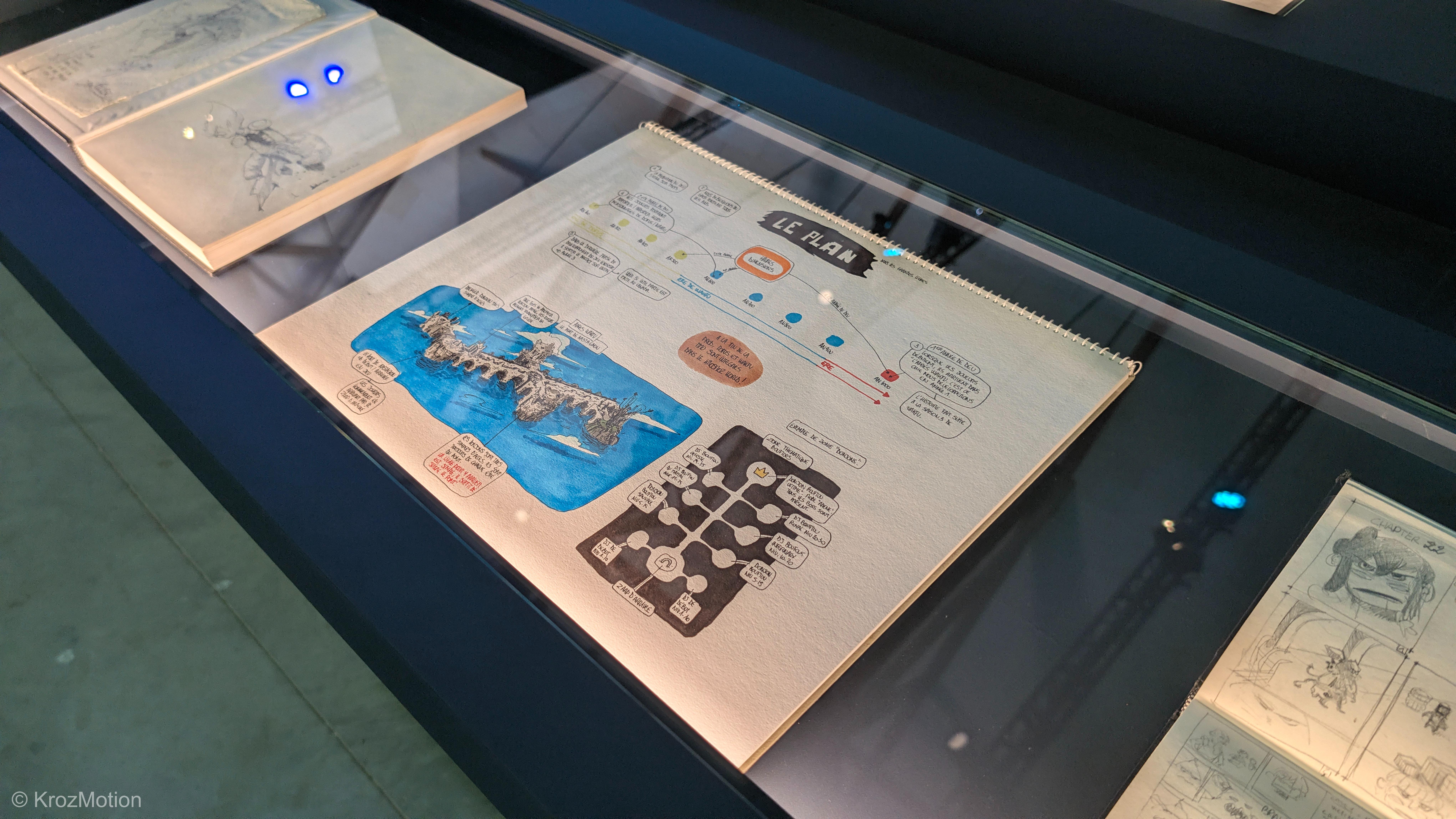
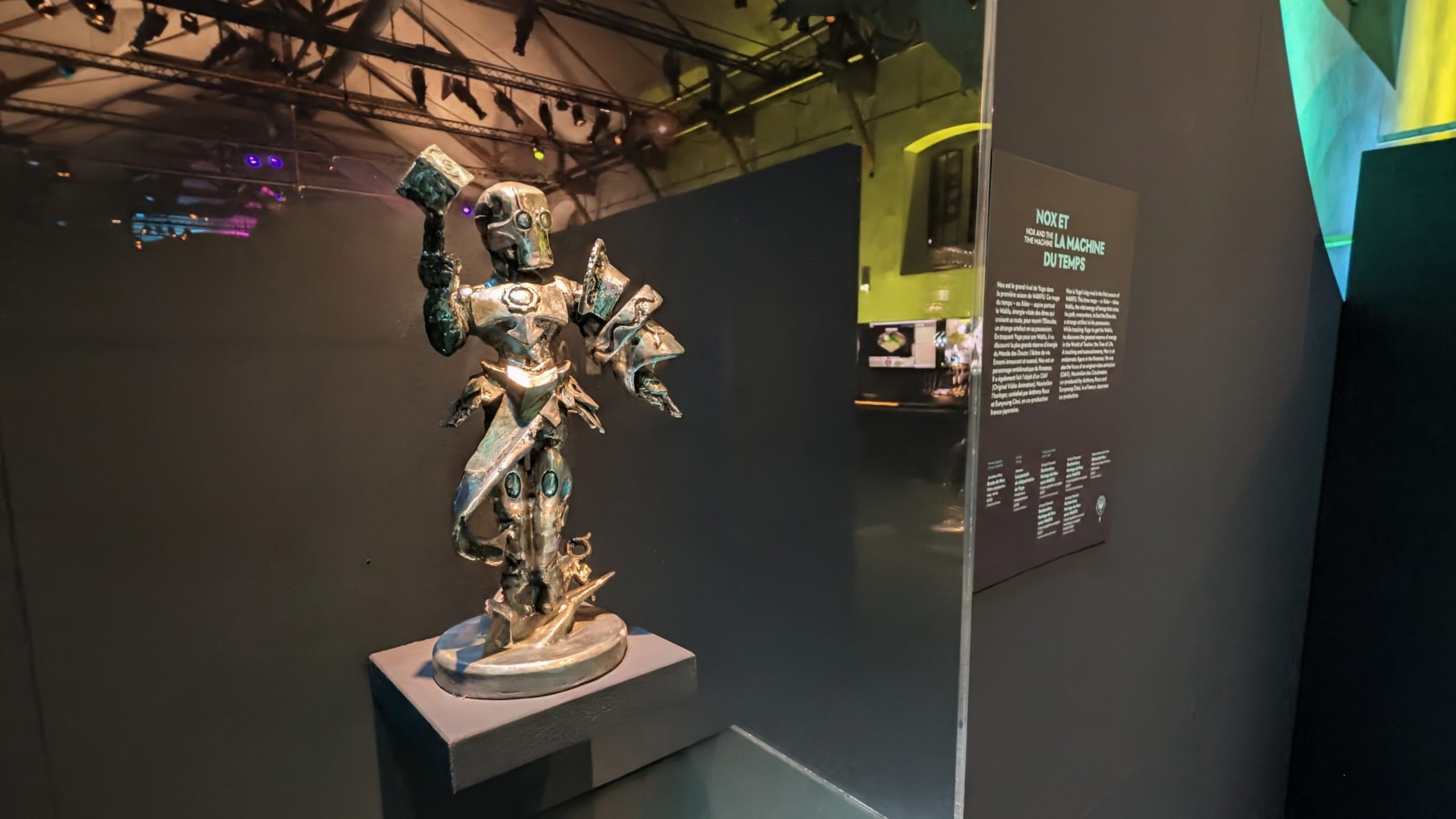
The most striking pieces are the original notebooks of Tot. The display cases also contain sketches, flowcharts and other notebooks, but not enough for my taste. There are also numerous pop culture references that may have inspired Ankama’s universe, such as Dragon Ball, Excalibur or comics. They are presented as simple influences, which fed into the names of items and quests, and into ideas.
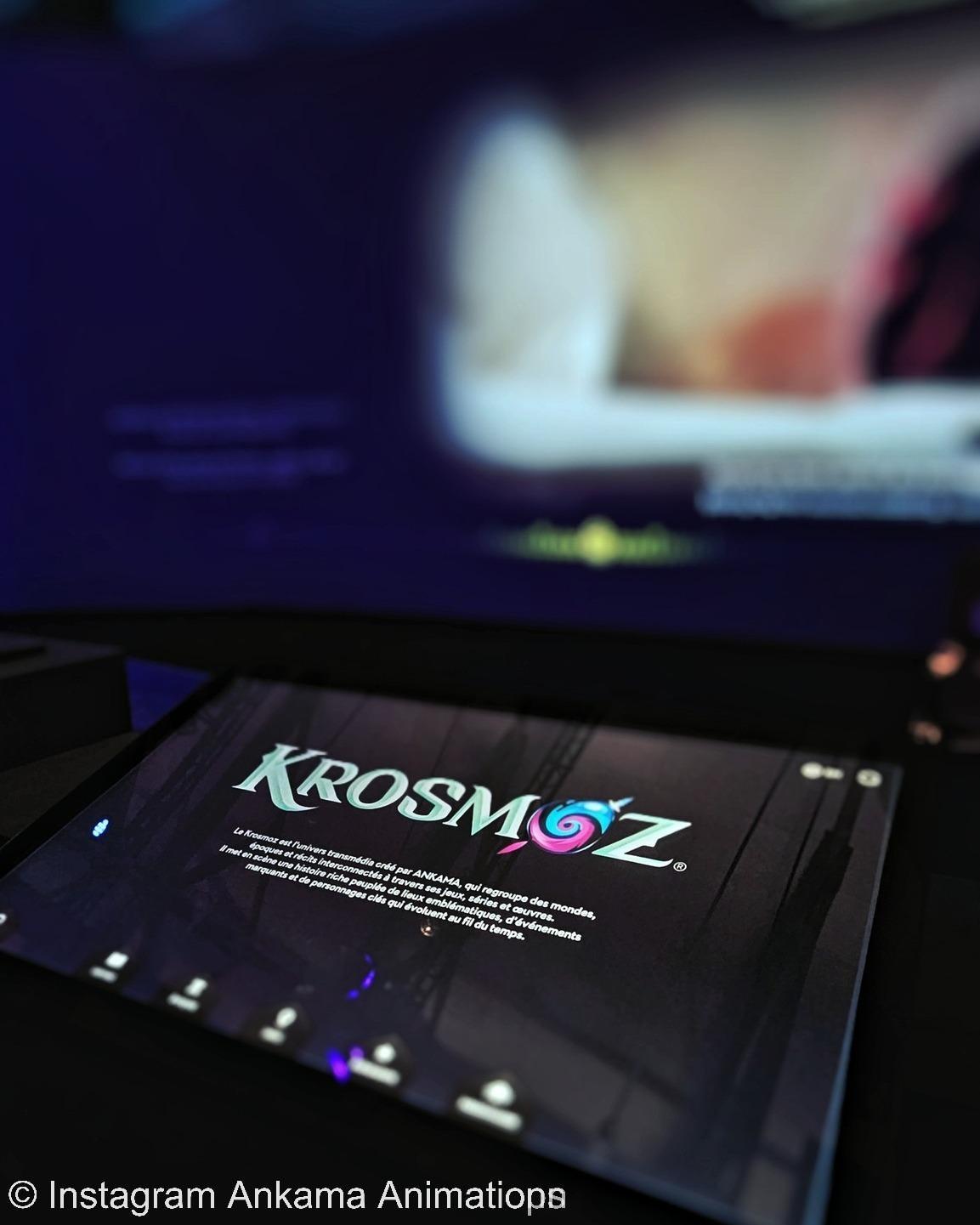
Tablets and screens, spread across several spots, let visitors dig deeper into the context. The production stages of a Wakfu episode are detailed in video and in artbooks fitted with transparent sheets, in the manner of celluloids, to visualize the different layers. This is probably the highlight for animation enthusiasts.
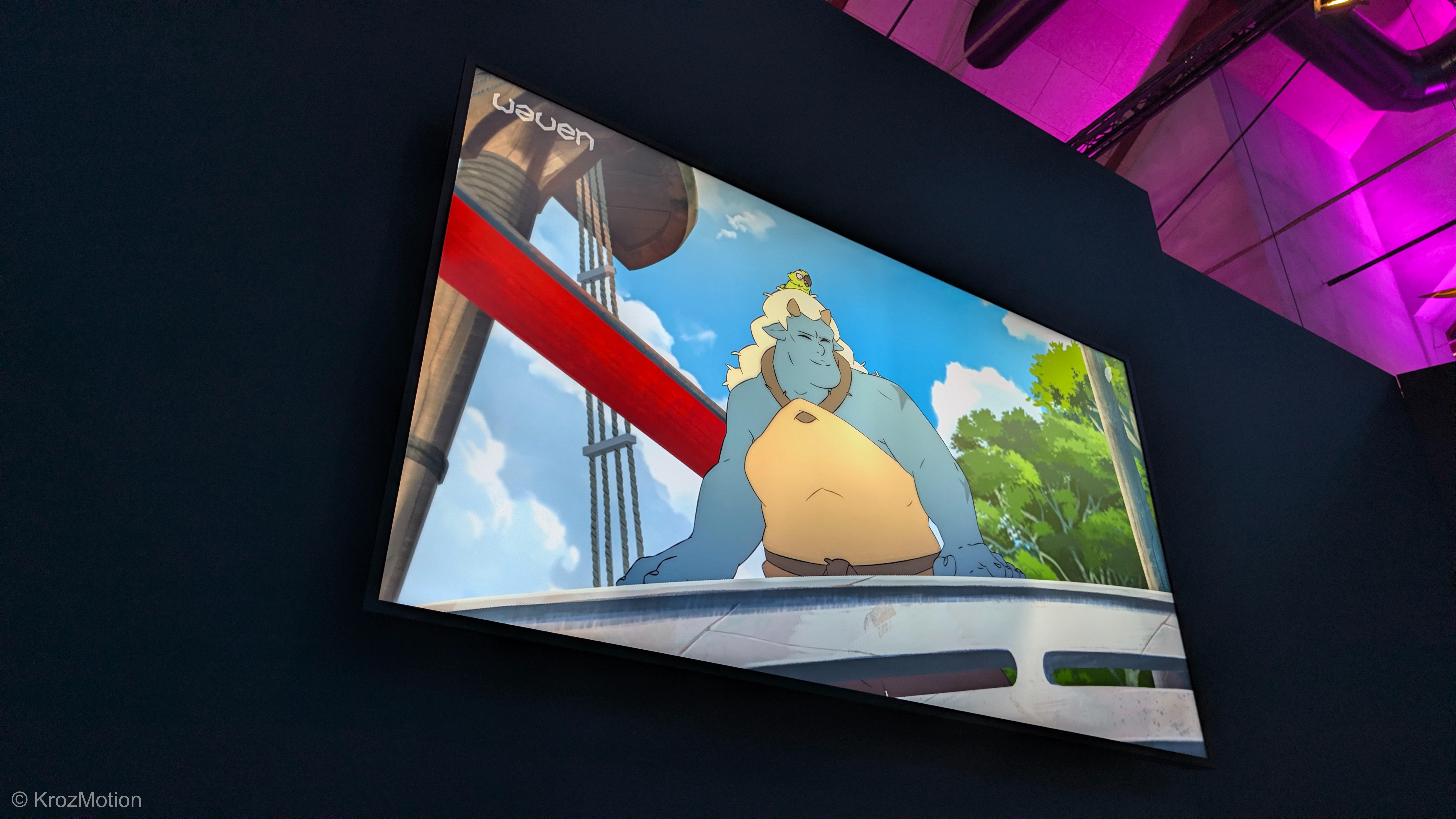
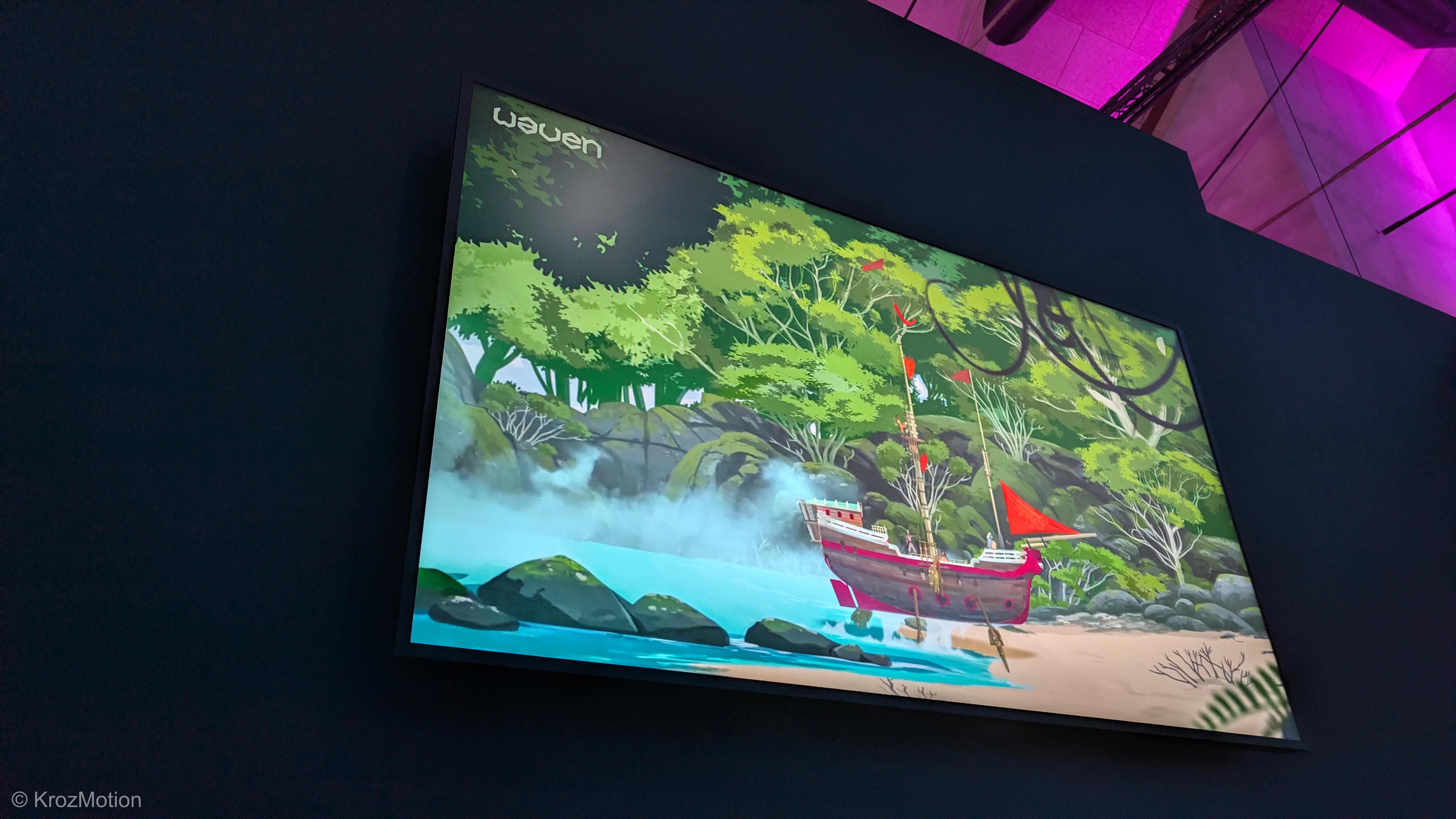
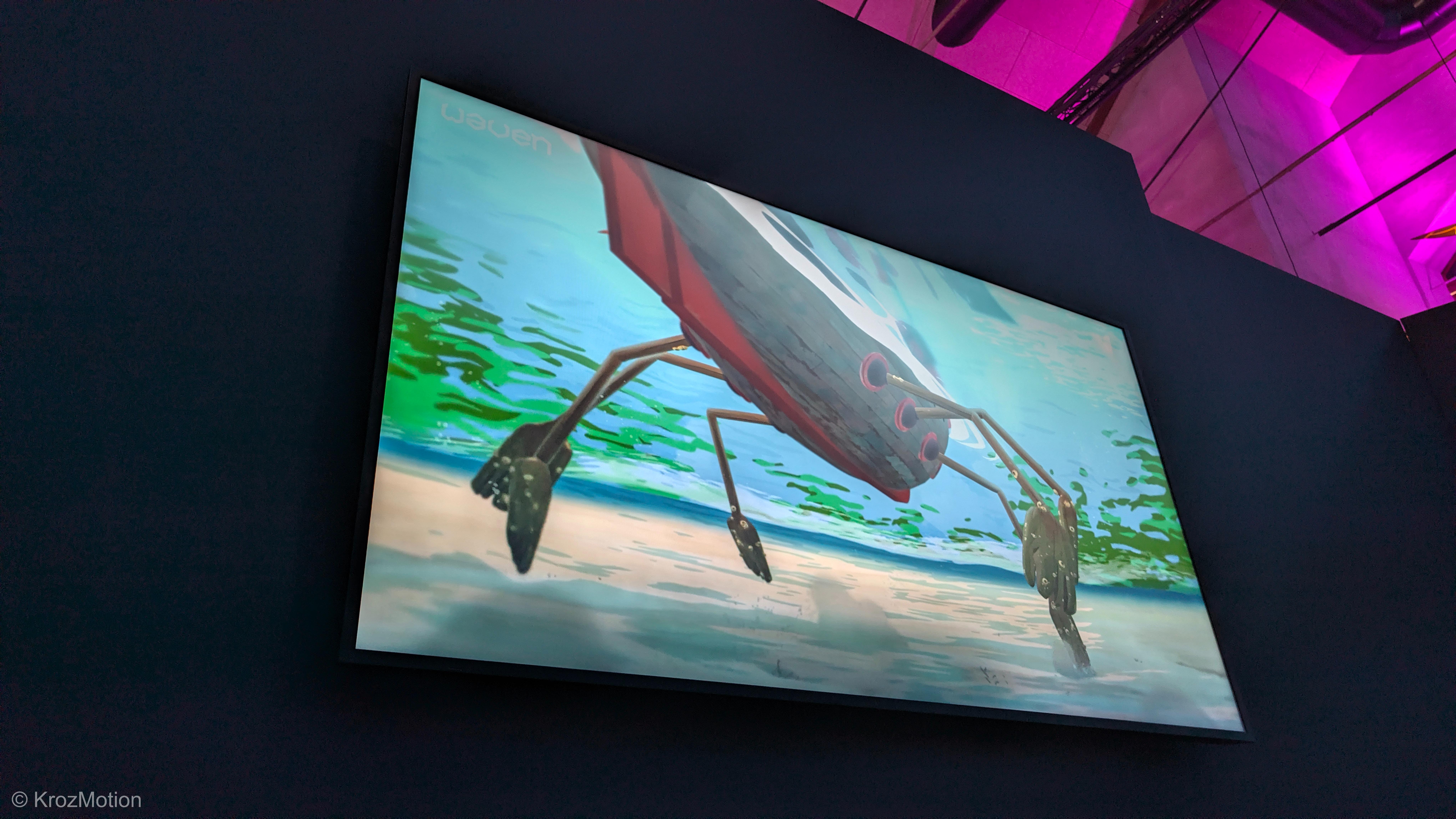
The Waven section is very thin. It shows a few shots, notably the pilot’s environments, and mostly covers the rising waters that brought about the era of Waven. You can watch the first minutes of the pilot, and only those.
The shop offers non-exclusive products, which can also be found on the Ankama Shop. Workshops, notably for schools, are organized around the exhibition.
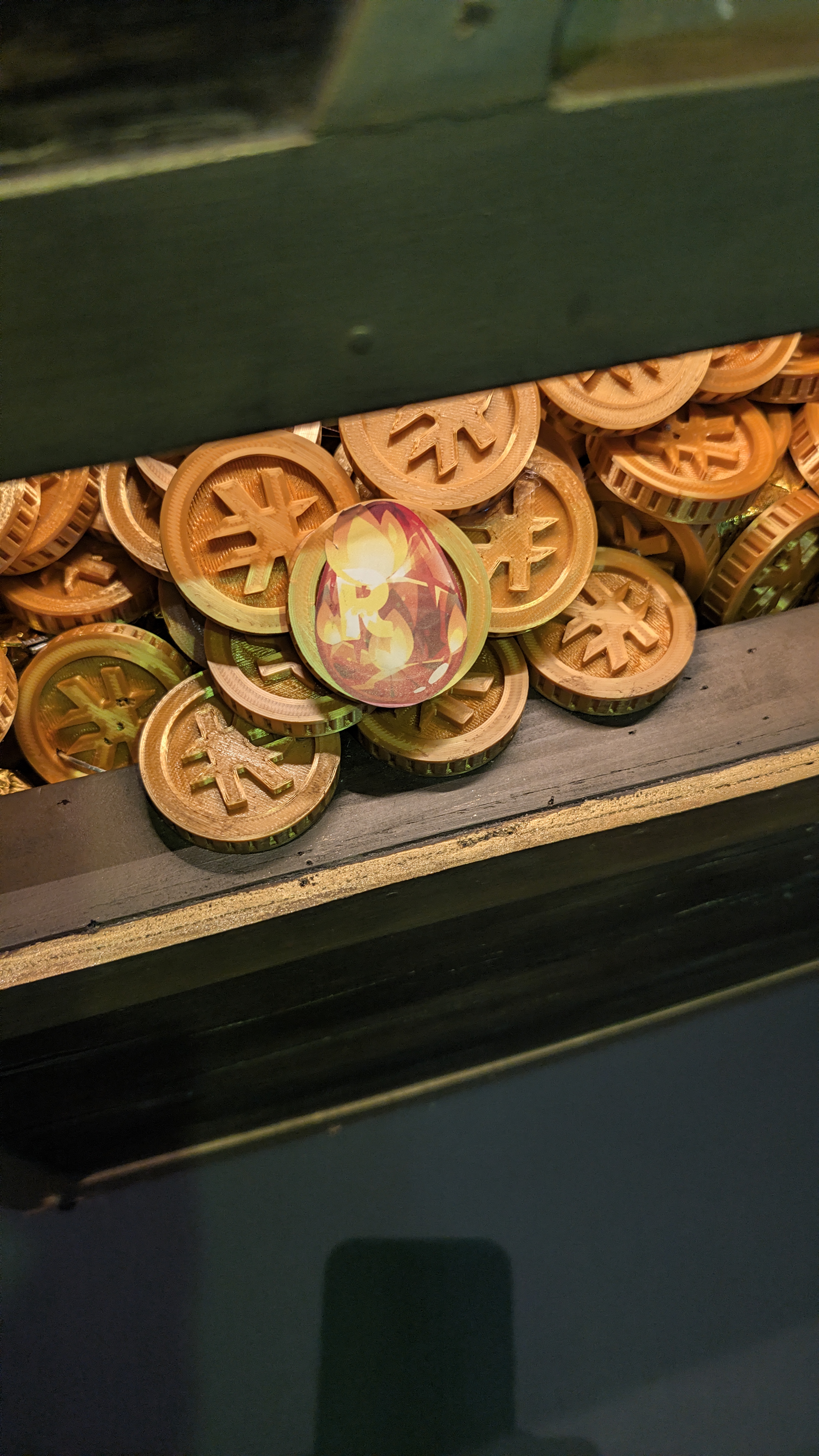
Visitors leave with a code for a purple token, usable on the Ankama Launcher. A hunt for the six Dofus is also built into the tour: each one comes with a letter, and collecting them earns a gift of little value. The hunt is subtly integrated through stickers, sometimes visible, sometimes hard to spot depending on the viewing angle.
The museum closes in January 2027
The Ankama exhibition will not last: the museum will close in January 2027, on the 31st. It will be replaced by another studio, which has not been announced. According to the guide, it would be an American animation studio. When I listed several names, I got a smile for Pixar, before she specified that she could not say anything. So this is in no way a confirmation.
She also mentioned that a concert is being planned before the closure.
The guided tour is enjoyable and traces the studio’s history well. The top 100 player I met found the tour rather good, while regretting that a few elements were missing.
The exhibition contains no truly new material that would justify crossing France, for example from Brittany. However, for anyone traveling near Annecy, the stop may be worth the detour. For newcomers as well as for children who came for Wakfu, it is a good entry point into Ankama’s universe.
One last thought, which is more a wish than a piece of information: with a good overhaul and more detail, this exhibition would make an excellent basis for a permanent installation in Roubaix, where the studio is based today. To my knowledge, no such project has been announced.
Thanks to the guide. I will not talk about the other exhibitions, as I went through them more by wandering, without being thorough. The main exhibition is so dense that there is not a square centimeter without something to discover, while the LAIKA one fits into ten square meters, but it is sublime.