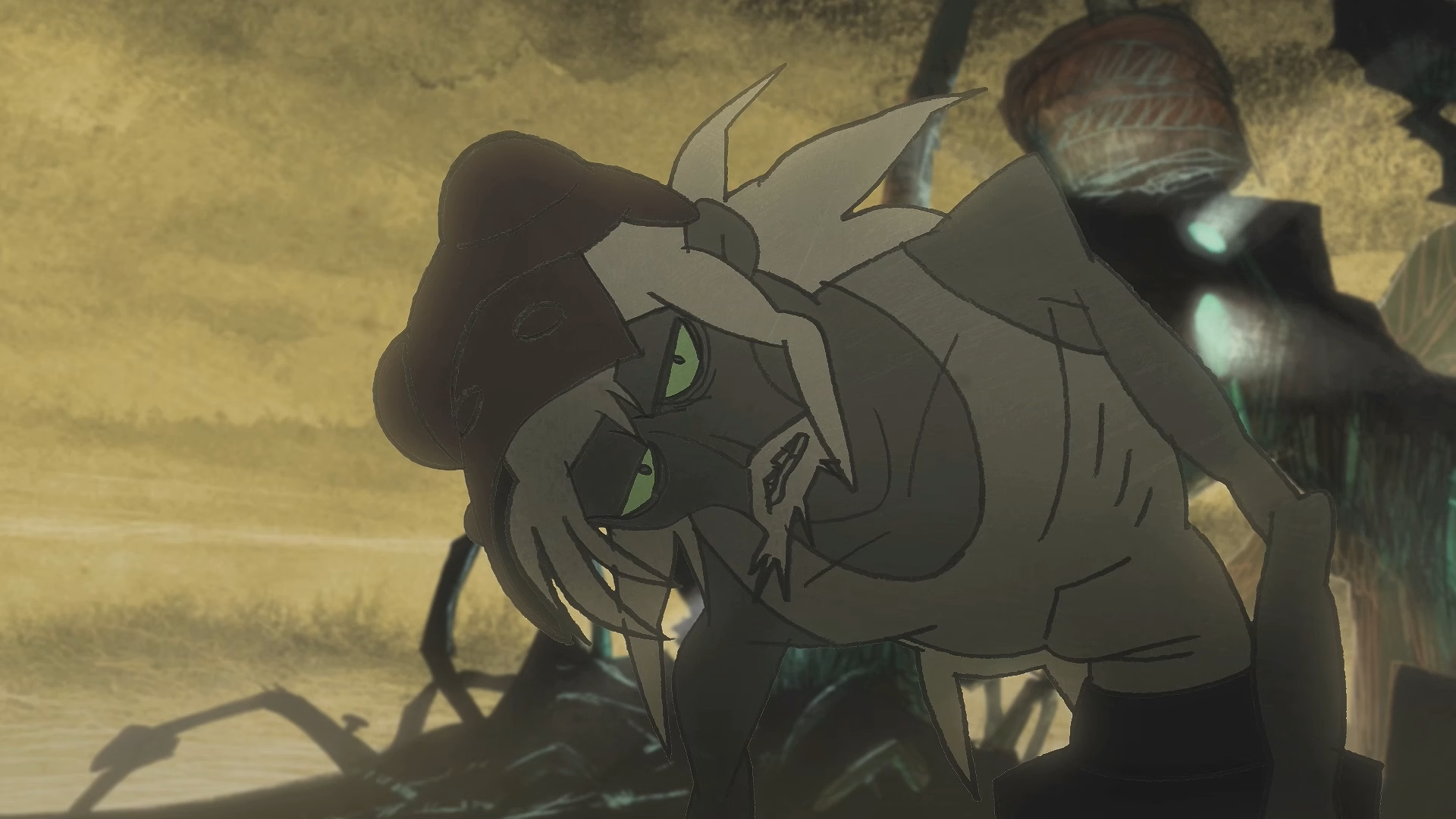
What remains of Ankama Japan, the Japanese branch of the Roubaix-based studio behind Noximilien l’Horloger and Ogrest, la Légende? In a long interview published on 21 September 2026 by Journal du Japon (then updated on 7 October), the French animator Eddie Mehong, who co-led the studio, gives his version of the story: a transfer of know-how around Flash, an OVA that succeeded artistically, then a dispute with Tot that led to the departure of director Eunyoung Choi. It is a rare account of a project more than fifteen years old, at a time when Ankama has since tried the Japanese experience again in a different way, collaborating with studios such as Studio 4°C (Mutafukaz) or, for its latest series Welsh & Shedar, the studio Massket.
Eddie Mehong describes himself as a “studio director, production management” rather than as an animator: he trains the French staff in the Japanese method, recruits artists according to the projects and animates himself when he has the time, while Eunyoung Choi helps him set up, decorate and organise the studio. On paper, he is its official head.
The interview gives no precise dates, no headcounts and no budgets.
A graduate of Gobelins in 2001, one year below Jérémie Périn (director of the series Lastman and the film Mars Express), Eddie Mehong left for Japan after meeting Yasuo Otsuka during his masterclasses at the school, and spent about a year at Telecom Animation Film (TMS) as an in-betweener, that is, the animator in charge of drawing the intermediate frames between two key poses. Back in France, he worked on character designs and animation at Marathon for Martin Mystery, Totally Spies and Team Galaxy, before leaving again for Tokyo, to Satelight, from 2007 to 2009, where he worked on Macross Frontier with Shôji Kawamori (a visa problem eventually brought him back to France).
He then founded Yapiko, a French-Japanese studio, followed by Echelle, then Transdyne, his current company, with a one-year stint as a producer at Crunchyroll which, he says, created a conflict of interest before his return to Yapiko. He is also behind a clip for the new hero of Overwatch, made with Double Cat Production, and Les Chroniques des mondes inhabités, currently in pre-production with Team TO.

Since Dofus was developed with Flash, a vector animation software, the team kept this tool for the Wakfu series, which was produced entirely with it. A pipeline (the production chain that sets out the stages of production) and a “Flash bible” document the creation of the characters, with one layer, in other words an independent drawing layer, for each facial variation.
According to Eddie Mehong, it was the French team who taught the Flash technique to the studio’s Japanese animators. Eunyoung Choi then reused this technique at Science SARU, the studio she founded after leaving Ankama Japan.
What is an enshutsu? In Japanese animation, the term refers to the person who stages an episode or a work, a position close to that of a director (Journal du Japon translates it as assistant director, while specifying that it can also mean an episode director or a stage director). Eunyoung Choi held that role at Madhouse, and it was in that capacity, Eddie Mehong explains, that she was able to offer animation work to animators. He places their meeting at the time of Satelight: she offered Malec (Alexandre Ulmann) and him the chance to work on the series Casshern Sins, he helped her as an animator, and they became friends.
When Ankama Japan came into being, she helped him set up, decorate and organise the studio. He held the official title of head, but she advised him a great deal, which allowed him, in his words, to get his bearings before setting up Science SARU. The journalist points out that she originally came from creation, storyboarding and staging, and that she is mostly known today as a producer.
It was after a year and a half at Ankama Japan that she directed Nox: Maximilien l’horloger. According to him, the episode did well artistically and perhaps less so commercially, though he gives no figures or details about the production.
For the record, databases place its broadcast on 5 June 2010 on France 4, and the Wakfu artbook recalls that Masaaki Yuasa, on the Japanese side, and Xavier Houssin (Xa), on the Roubaix side, were working in parallel on the designs of Nox’s family. This dual graphic parentage helps explain what followed.
The Disagreement with ToT
It all begins with a change of roles that ToT himself wanted. According to Eddie Mehong, the founder of Ankama judged that Eunyoung Choi was managing well and that he was struggling a bit with running the studio: he therefore suggested that he step down from his managerial duties to concentrate on the artistic side, and hand the direction of Ankama Japan over to the director. Eddie Mehong accepted without difficulty, since he wanted a change of activity.
The sticking point was the graphic style. ToT had asked them to stay close to the original character design by Xavier Houssin, illustrator and art director, but Eunyoung Choi did not follow this instruction and developed a hybrid style “à la Masaaki Yuasa”, close to that of Noximilien. Eddie Mehong stresses the difference in context: Noximilien was a standalone OVA, whereas here this style appears in an episode placed in the middle of a twelve-episode series, which has to keep a consistent look from start to finish. The interview mentions an episode linked to the Dofus series, almost finished, without giving its number or dates.
About a year later, again according to him, ToT came back to look at the work, grew worried and declared that this was not at all what he had asked for. Eunyoung Choi then reminded him that he had told her she could do whatever she wanted, and Tot replied that this was true, but within reasonable limits. The almost finished episode was thrown in the bin. Both lost their temper, Eddie Mehong speaks of a major misunderstanding about the freedom granted to the director, and Eunyoung Choi left the studio, slamming the door behind her.
With hindsight, Eddie Mehong doubts that handing the direction to Eunyoung Choi was a good idea, before qualifying that: the future showed that it was one, but not for Ankama Japan. This is, however, the account of a single witness, and the interview contains neither ToT’s version nor Eunyoung Choi’s.
Eunyoung Choi first worked as a freelancer, while Eddie Mehong set up Yapiko with two colleagues. Some time later, she told him about her plan for a studio with Masaaki Yuasa, and a few months after that Science SARU was born, with Yuasa and two senior animators recruited from Ankama Japan, Abel Góngora and Juanma (Juan Manuel Laguna). For Eddie Mehong, Science SARU is in a way the direct successor to Ankama Japan: Abel Góngora and Eunyoung Choi developed Flash extensively there in order to integrate it into the Japanese pipeline.
The studio started, according to him, with Ping Pong, on which it worked as a subcontractor for Tatsunoko, then followed with Devilman Crybaby, welcoming other Ankama Japan alumni such as Kurashima Ayumi, the series’ character designer. For his part, Eddie Mehong took on Hiroshi Shimizu, character designer on Ogrest, la Légende. The journalist remarks that the two studios shared the staff of Ankama Japan between them.
The interview echoes what we published in January 2015 about the abandonment of Dofus: Welsh & Shedar. The first episode, left unfinished, had been animated with Ankama’s Japanese department, and ToT explained at the time that the Japanese and French teams were not managing to work well together, which had led to the studio’s closure. In that same article, ToT saw at least one benefit in this aborted series: having seen the Japanese draw inspiration from the French way of working. That is precisely what Eddie Mehong describes regarding Flash. The project is being revived today, as we explained in April 2025, with a production carried out entirely in Japan under the supervision of producer Widad Noureddine and the studio Massket, for which this is the first collaboration with Ankama.